THE CASTLE
THE VESTIBULE
THE SALON OF BATTLES
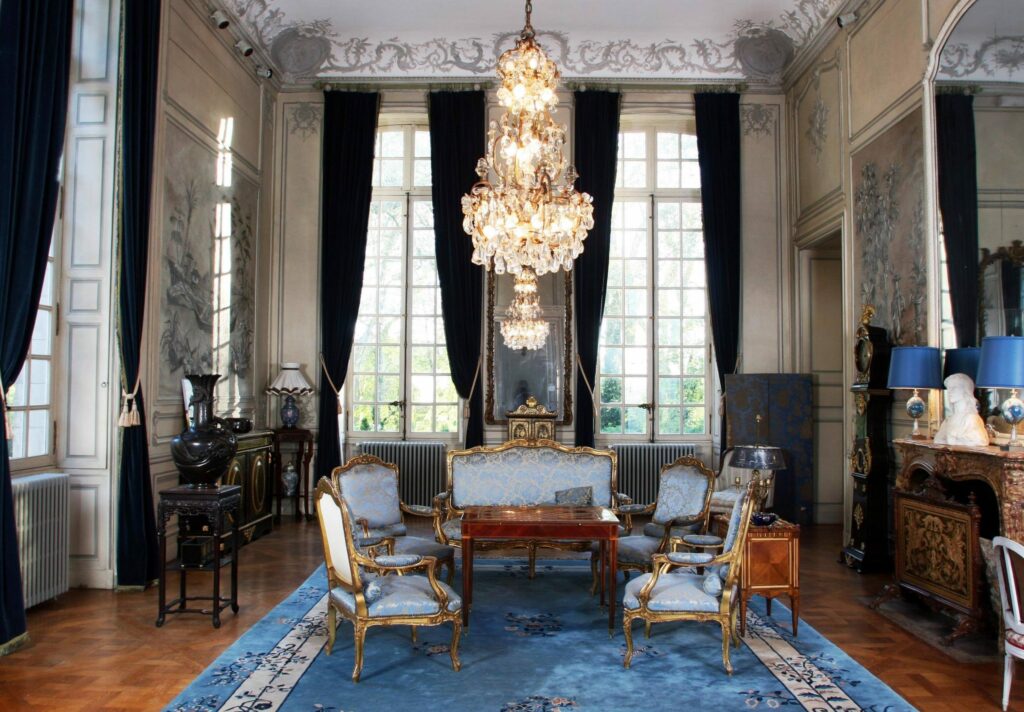
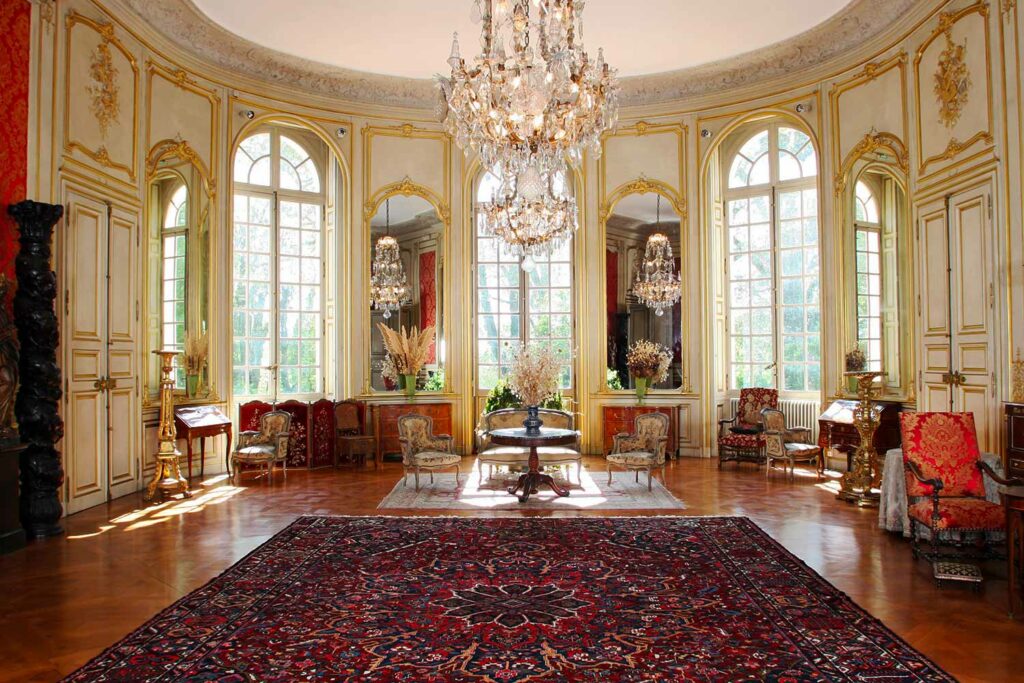
THE GRAND SALON
The Grand Salon is one of the château’s most magnificent state rooms.
With its harmonious proportions, thoughtful layout and luminous clarity, it perfectly reflects the architectural refinement of the 18th century, marked by a taste for symmetry and light.
Carved wood panelling, enhanced with gilding, frames large mirrors and accentuates the height of the ceiling.
This room, both a reception and ceremonial space, once housed, during the d’Argenson family’s time, the Gobelins tapestries devoted to the History of Don Quixote, woven between 1732 and 1736.
Presented in 1736 by Philippe d’Orléans, the Regent, to the Comte d’Argenson as a token of friendship and gratitude, they recall the minister’s distinguished place in the political and artistic life of his century.
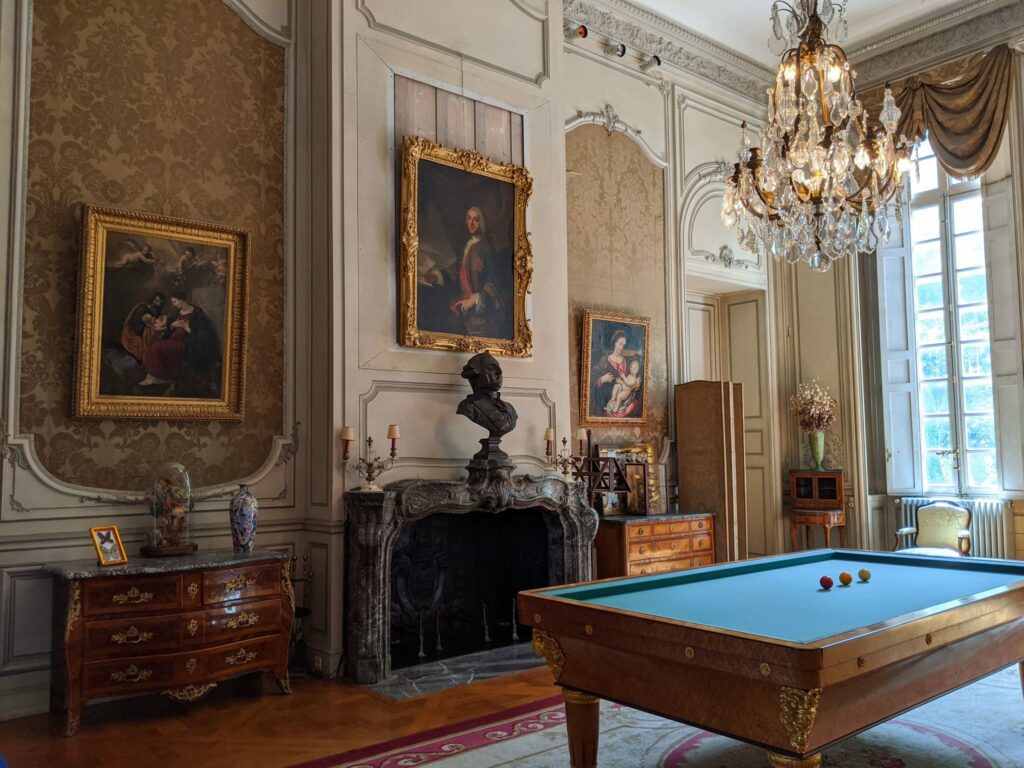
THE SMALL DRAWING ROOM OR BILLIARD ROOM
Now used as a billiard room, this salon was referred to as the “Small Room” in the memoirs of painters Taillebourg and Voyer in 1905–1906.
Like the Salon of Battles, it extended the central salon during major receptions.
The room contains an 18th-century fireplace, the second in the central wing, designed in 1750 by the renowned ornamental sculptor Nicolas Pineau (1684–1754) for the gallery of the Château d’Asnières, the Marquis de Voyer’s first major architectural work (1750–1752).
This exuberant rococo fireplace was identified thanks to its trompe-l’œil model preserved at the Hermitage Museum in Saint Petersburg.
It was acquired by the d’Argenson family at the end of the 19th century, during the dismantling of the décor of the Château d’Asnières.
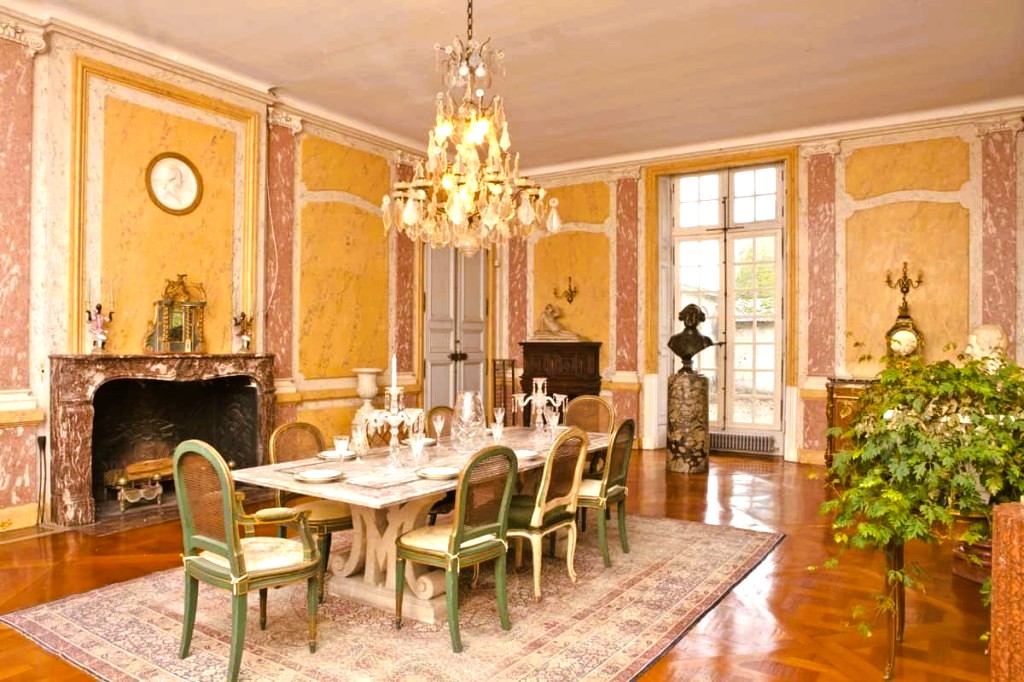
THE DINING ROOM
THE LIBRARY
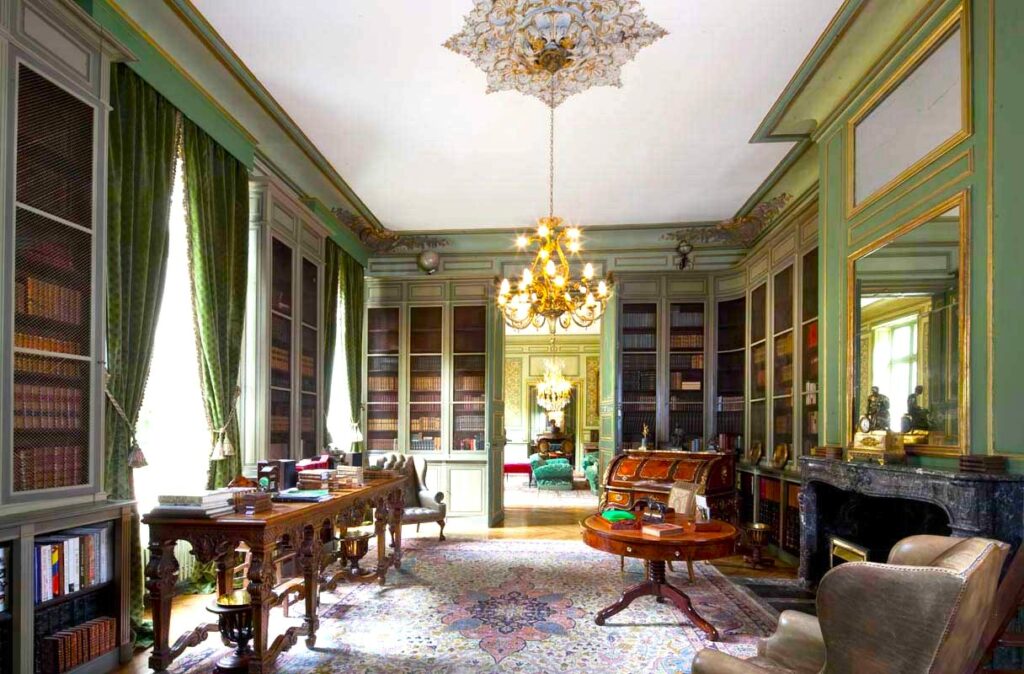
Under the comte Marc-Pierre d’Argenson — one of the most eminent bibliophiles of his time — the library contained over 6,000 volumes.
After the transfer of its finest works to the marquis de Paulmy in 1764, now preserved at the Bibliothèque de l’Arsenal in Paris, the collection was later enriched by the marquis de Voyer at the end of the 18th century, and by Sophie de Rosen, wife of the marquis d’Argenson, in 1801.
By the early 20th century, it held nearly 8,000 volumes.
Divided into three large rooms by marquis Marc-René-Marie d’Argenson during the Consulate, two of them were restored by Mr. Abbou, the château’s current owner, in the 2000s to revive their former splendour.