THE REMARKABLE OBJECTS

LOCKS

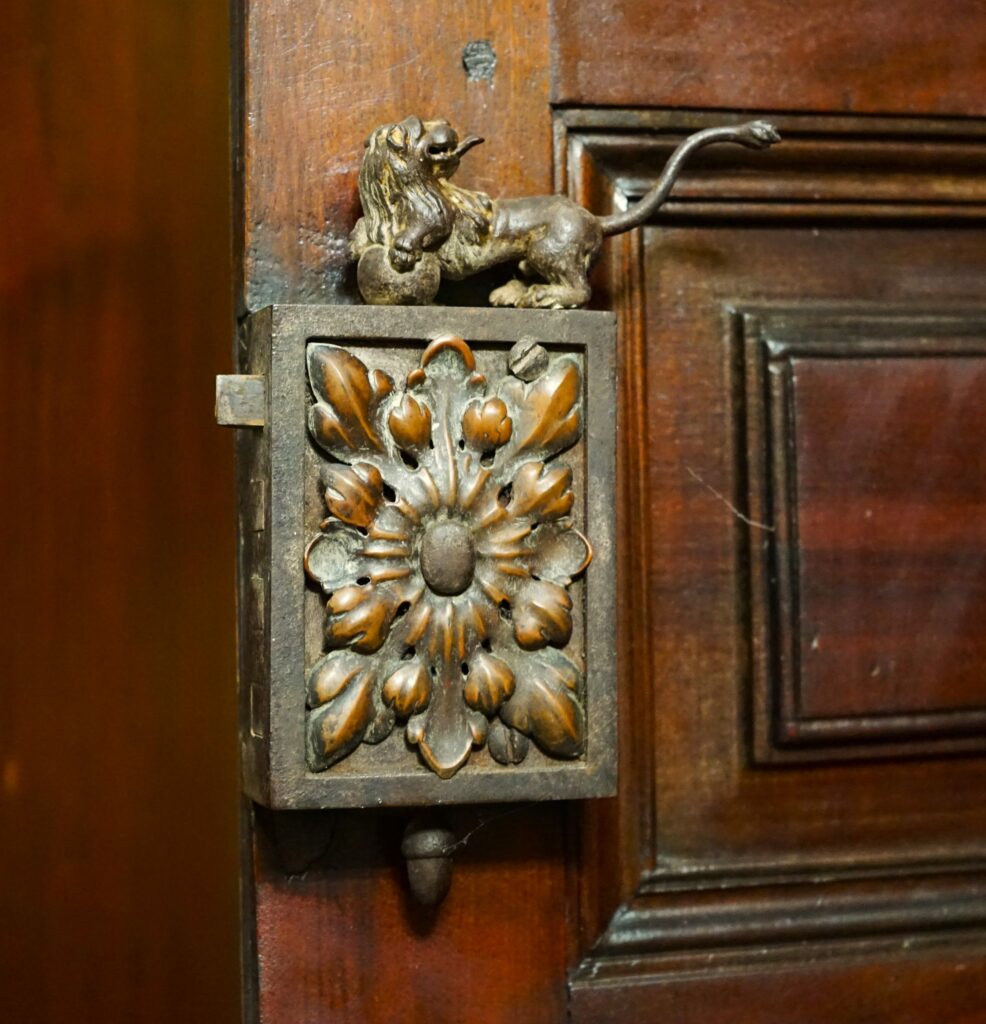
The Château des Ormes preserves an exceptional collection of 17th- and 18th-century locks, knockers and bolts — true masterpieces of ornamental ironwork. Many still adorn their original doors, including that of a study where the Comte d’Argenson once withdrew to read and reflect. Each hand-chiselled motif reveals the precision and imagination of the craftsmen of the time — leaves, scrolls, lions and family emblems such as the famous d’Argenson lion. Both functional and decorative, these ironworks embody a rare artistry in which metal becomes sculpture — a reflection of the attention to detail that defined the art of living during the Enlightenment.
Detail of the lock on the small salon door featuring the d’Argenson lion.

THE HERBARIUM OF THE MARQUIS D’ARGENSON

Rediscovered in 2001 in the d’Argenson Wing, the herbarium of Marquis Marc-René-Marie d’Argenson is one of the most important private botanical collections in France. Begun in 1804, it brings together more than 3,000 plant specimens from the estate and the Marquis’s travels, preserved across 85 meticulously bound volumes.
Each page, finely annotated in his elegant hand, reveals both his scientific precision and his deep naturalist sensibility — a continuation of the Enlightenment spirit of observation and wonder.
Carefully restored, this remarkable collection was awarded in 2003 the “Prix Hubert Heilbronn et ses enfants” by La Demeure Historique.
A true botanical encyclopedia, the herbarium embodies the harmony between art and science that still defines the Château des Ormes today.
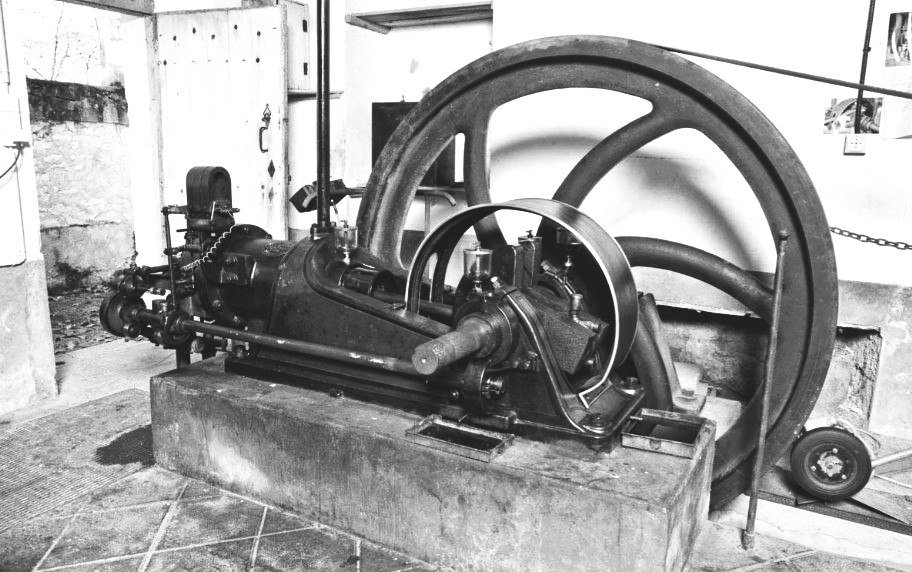
THE POWER STATION

Installed in 1906 in the former gatekeeper’s lodge, facing the return pavilion of the d’Argenson Wing, the power station made the Château des Ormes one of the very first electrified estates in the region. This innovation marked a true revolution in the daily life of the estate, blending mechanical ingenuity with modern comfort. Designed and built by the Poitiers engineer Charles Gaillaud, it remains one of the last surviving examples of its kind in France — a lasting symbol of the d’Argenson family’s fascination for the progress.
Power station.
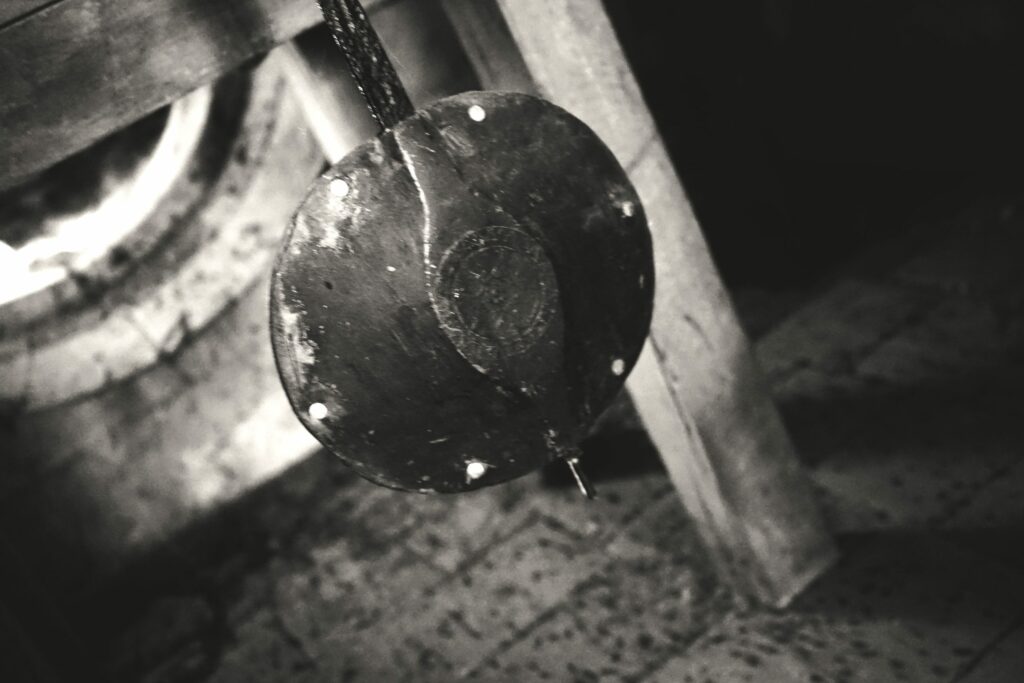
Mechanism of the clock on the pediment.

THE CLOCK

Set within the central medallion of the Pussort Wing’s pediment, the clock overlooks the château’s cour d’honneur.
This wing, rebuilt between 1757 and 1759 to harmonise with the rest of the estate, reflects the architectural unity desired by Comte Marc-Pierre d’Argenson.
The pediment is adorned with a crown, a lion — that of Saint Mark of Venice — and a unicorn, emblems of the d’Argenson family.
Through this symbolic composition, the pediment clock remarkably evokes the family motto, “Vis et prudentia vincunt” — strength and prudence prevail — combining time, power and wisdom.

SUZETTE II

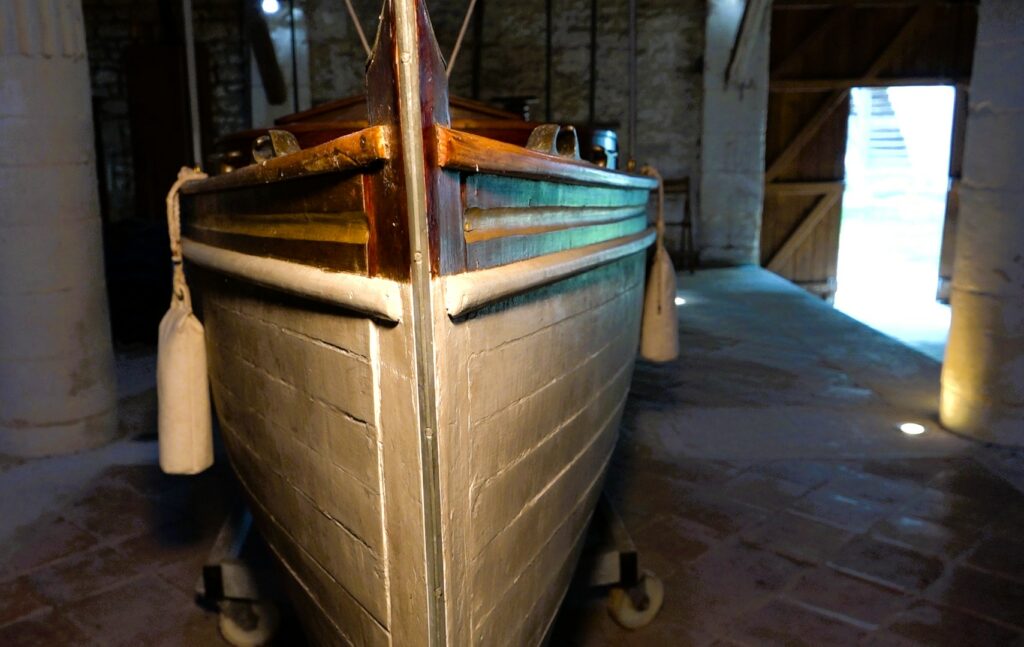
Built in 1902, Suzette II is today the oldest known surviving motorboat. Beyond its participation in races, it was used by the d’Argenson family and their guests for leisure cruises on the River Vienne, reflecting the elegance and modern spirit of château life during the Belle Époque. Rediscovered in 2001 in the estate’s storage barn, buried under layers of materials, it was listed as a Historic Monument in 2002 and restored in 2006. A symbol of both refinement and innovation, Suzette II bears witness to the d’Argenson family’s enduring fascination with progress and the technical marvels of their time.
Canot Suzette II in the former central building designed by Charles De Wailly.